Showing posts with label historical novels. Show all posts

Sunday, March 22, 2015

The Ruby Brooch - A Review

By

Katherine Logan

SYNOPSIS
As a child, I fell in love with history, then later as a young adult, I started reading historical fiction. A passion for history and a fascination with mysteries and time travel led to writing time travel romance.  

One of my favorite writing experiences happened a few years ago during the Christmas holidays. I was working on the stampede scene in THE RUBY BROOCH and I needed gun information. So I went to a local store. My first visit ever! The store was crowded with holiday shoppers. I stood at the door not knowing what to do. The cashier asked if he could help me. I said, "I need a gun that will kill as many cows as possible in the shortest amount of time." The store went completely silent. The men stared at me. I had a lot of explaining to do. After they discovered I was a writer, everyone wanted to give me gun advice. 
From the Inside Flap
From the white-plank fenced pastures of Lexington, Kentucky, to the Bay of San Francisco, The Ruby Brooch, a saga steeped in family tradition and mystery, follows a young woman's amazing journey as she tries to solve the murder of her birth parents 160 years in the past.

REVIEW
I love a good historical romance, but throw in Western Historical Romance, and I am a sucker.  I grew up teething on Louis L’Amour.  Despite the preconceived notions that he is a men’s cowboy author, his novels were full of rich western history and were filled with actual magical locations throughout the West.  He was also not afraid of a heavy dollop of romance and believed very much in “happily ever after”.
I feel that I have found another magical spinner of western romance in Katherine Logan, plus the added aura of just a touch of fantasy with the fun of time travel as her story whisks the reader back and forth between the mid-1800’s and the current day twenty-first century.  The characters that Ms. Logan introduced us to were bigger than life, as all western heroes should be, when the heroine found herself back in the 1800s.  What was fun was that those bigger than life heroes were quite ready for the strong headed, thoroughly modern heroine that was doing her best to fit into a more docile role of the 1800’s woman, and not quite making it. 
It was easy to fall into the story and fall in love with the hero as the storyline rocked along on the Oregon Trail on the un-cushioned seat of the heroine’s buckboard.  Being the brilliant woman that she was, she brought taboo items from the 21st century back with her to make sure she could survive the wilds of the Wild West and in doing so saved lives of others around her.  Her training as a volunteer Paramedic definitely came to her rescue on more than one occasion, too.
As with any great western there were Villains, and the Villains in The Ruby Brooch were the ones responsible for killing the heroine’s parents…or were they?  The mystery of the letter left to the heroine, along with the Ruby Brooch that transported her between centuries left the heroine with few clues and an agonizing need to find the answer to who she was…
Like the giant of western writers, Ms. Logan painted fantastic scenery displays of the west that the wagon train traveled through, providing the reader with glimpses of the beauty of an untarnished land as she painted her landscapes in bright colored strokes across the pages.  Likewise, she spent equal time developing the personalities of the main characters giving us glimpses of the many layers of who they were and who they longed to be. 
The love story was not a disappointment.  Like a good loaf of homemade bread, Ms Logan introduced all the necessary ingredients and then added them to the mix as needed, adding the yeast of yearning for love to mix in and a large dollop of sugar to feed the love and help it to grow and infuse through the rest of the mixture.  As time and the story moved forward, she message and kneaded the growing attraction and love, then laid it aside to perk and rise.  Later she brought it out and pounded that love flat with a beating of stress and strife as the story went through stressful period… For as with any love, love grows and is beat down, but true love grows back, sweeter and better than before.  In the end, her final presentation was as deliciously sweet and comforting as a freshly baked loaf of bread, fresh from the oven. 
By the time I had finished consuming the novel, much like a freshly baked loaf of bread (smile), I was longing for another fresh loaf, hot out of the oven.  I hope we are not long in waiting. 
This novel was a wonderful FIVE STAR RATING. Katherine Logan will be an author I will be re-visiting and looking to read again.

ABOUT THE AUTHOR
Katherine grew up in Louisville, Kentucky and attended college in New Jersey, where she earned a BA in Psychology and a minor in Criminal Justice. After attending the Philadelphia Institute for Paralegal Training, she returned to Central Kentucky and worked as a real estate and tax paralegal. Katherine is an avid reader, a marathoner, and lives in Lexington, Kentucky.

Website: www.KatherineLLogan 
Blog: www.KatherineLowryLogan 
Facebook: Katherine Lowry Logan, author
Twitter: @KathyLLogan


Monday, March 2, 2015

Rebel Queen


By
Michelle Moran


Before I start this review, I want to congratulate Michelle on the greatest and most beautiful creation she has ever shared with the world.  Her name is Collete and she was born February of 2015.  What a joy it was to see her and her mom, both glowing with life, just as I had finished the final pages of Michelle’s spellbinding story of her other love, India.  I wish you and your family much happiness in the years to come.  May the warmth of the sun and the kind love that you have found in your adopted country bring you peace and contentment as you watch your daughter grow in health and beauty.
Karen

Synopsis
From the internationally bestselling author of Nefertiti and Cleopatra’s Daughter comes the breathtaking story of Queen Lakshmi—India’s Joan of Arc—who against all odds defied the mighty British invasion to defend her beloved kingdom.
When the British Empire sets its sights on India in the mid-nineteenth century, it expects a quick and easy conquest. India is fractured and divided into kingdoms, each independent and wary of one another, seemingly no match for the might of the English. But when they arrive in the Kingdom of Jhansi, the British army is met with a surprising challenge.
Instead of surrendering, Queen Lakshmi raises two armies—one male and one female—and rides into battle, determined to protect her country and her people. Although her soldiers may not appear at first to be formidable against superior British weaponry and training, Lakshmi refuses to back down from the empire determined to take away the land she loves.
Told from the unexpected perspective of Sita—Queen Lakshmi’s most favored companion and most trusted soldier in the all-female army—Rebel Queen shines a light on a time and place rarely explored in historical fiction. In the tradition of her bestselling novel, Nefertiti, and through her strong, independent heroines fighting to make their way in a male dominated world, Michelle Moran brings nineteenth-century India to rich, vibrant life.

REVIEW:

Michelle is a woman who loves history, but more than that – She is a woman who loves the strong women who made a difference in history.  Over the years she has written books on Nefertiti,  The Heretic Queen (another Egyptian queen),  Cleopatra’s Daughter, The Second Empress (of the Court of self-proclaimed emperor Napoleon Bonaparte), and Madame Tussaud (an extraordinary wax sculpturor who lived in France just prior to and during the French Revolution).  Only a woman who is sure of her own worth could begin to address and take on the giants of history that she has and give each of them the breath of life that comes flying of the page of each of her novels with the searing heat of a woman’s passion.
I have long had a love affair with the stories of India.  They date back to Rikki Tikki Tavi and The Man Who Would be King by Rudyard Kipling.  Then later, I found and fell in love with M M Kaye and The Far Pavilions.  The mystic and romanticism that far-away place would take me to planes of wistful fantasy that it seems I never recovered from, or could it have been the longing for the young principal of the English High School of New Delhi that so wanted to whisk me back to India oh so many years ago that is the cause that I have never quit hearing India call my name in the wind?
The Rebel Queen, like her other novels does not just tell a story, it immerses the reader into history.  From the first page, you are drawn in to hear a story, and it is told just as a story would be told from one person to another.  A dearly loved and very personal story that has great meaning.  The story teller was in fact a female guardsman of the Queen and the entire story is told from her point-of-view. 
As the story went along, I felt like I was sitting down over a cup of English Tea and listening to her talk and tell her life’s story, just like my great grandmother told me hers when I was young.  When something would come along that is no longer done or has changed radically, she would pause and explain why it was the way it was and how it used to be.  All was told with loving kindness, like to a child, even though, in reality, it was a letter to an editor for a book.  The editor lived in England and still the narrator took the time, as if she were present and she was talking to her face-to-face.
I have read several books and novels about the Sepoy uprising in India but this is the first time I feel that I truly have heard the story from the viewpoint of the people of India.  Always before, history has been written and told by the victors, but this voice came from the survivor and the voice who tried to bring reason.  It is a new voice and a beautiful voice that stays true to the attitude and lifestyle of the people of the area.  But at the same time, the story demonstrated the ugly side of what anger and mob mentality can do.  When men cease to think like men and begin to act like mindless animals. 
The facts of the story stay true to the history of the events.  It is the humanity of the story and the humanity of the Queen that made this one of the most beautiful stories of India and her people I that I have read.  It is exceptional for a rebel Queen’s memory to have come down and consistently be remembered by her people for her leadership through a difficult period and her kindness to the people she reigned over.  What set the lady apart that her personal guards stood fast when others turned and ran? 
The Rebel Queen is a story worth reading and re-reading, just for the joy of the story-telling by Michelle Moran, as well as the beauty of the story itself.  For those wanting just a taste of the venue for the story visit The Rebel Queen at her website.
I would give Rebel Queen FIVE STARS.  Thank you for putting such a huge dollop of love into this book, Michelle.  It shows.

A copy of Rebel Queen was provided by Net Galley to read for this review.

ABOUT:
Michelle Moran is the international bestselling author of six historical novels, including Madame Tussaud, which was optioned for a mini-series in 2011. Her books have been translated into more than twenty languages.

A native of southern California, Michelle attended Pomona College, then earned a Masters Degree from the Claremont Graduate University. During her six years as a public high school teacher, she used her summers to travel around the world, and it was her experiences as a volunteer on archaeological digs that inspired her to write historical fiction.

In 2012 Michelle was married in India, inspiring her seventh book, Rebel Queen, which is set in the East. Her hobbies include hiking, traveling, and archaeology. She is also fascinated by archaeogenetics, particularly since her children's heritages are so mixed. But above all these things, Michelle is passionate about reading, and can often be found with her nose in a good book. A frequent traveler, she currently resides with her husband, son, and daughter in the US.
To learn more about Michelle and her books visit her at www.MichelleMoran.com


INTERVIEW:
Q: Rebel Queen is full of references to canonical works of literature. Like Sita, are you most inspired by William Shakespeare? Who would you name as your top five favorite authors?
A: Without a doubt I am inspired by Shakespeare, and he is definitely among my top five favorite authors, along with Janet Fitch, J. R. R. Tolkien, Douglas Preston, and Erik Larson. I was extremely fortunate to be able to study Shakespeare with a brilliant professor, Martha Andresen, who is now retired. She was phenomenal, and the way she brought Shakespeare’s plays to life made you realize that Shakespeare truly wasn’t of an age but for all time (as his contemporary, Ben Jonson, said). There’s a wonderful book by Harold Bloom called Shakespeare: The Invention of the Human, and he sums up better than I ever could what makes the Bard so unique among authors. Perhaps this is why Shakespeare is read in every part of the globe, including India.

Q: This novel, much like your international bestseller Nefertiti, recounts a story based on the real life of long-dead queen from antiquity. What draws you to characters like Rani Lakshmi and Nefertiti? 

A: The characters from history who jump out at me are often women who managed to carve powerful roles for themselves in societies where women weren’t typically allowed positions of power or authority. They are also the ones who have lived through some sort of revolution and managed to weather it. Revolution is fascinating to me, whether it’s cultural, religious, or political. In Rebel Queen, the people of India are growing tired of England’s physical and political encroachment on their land. As they begin to voice their displeasure, however, England responds by tightening its grip, and once the people of India take up arms, England sees it as a revolution and acts accordingly, sending in an army to suppress what they see as a “rebellion”. Whenever a rebellion or revolution occurs in a society, new leaders emerge who are often tremendously charismatic or in some other way very interesting. In this case, one of those leaders was Rani Lakshmi.

Q: Why did you decide to tell this story from Sita’s point of view? Is she your favorite character? If not, who is your favorite?

A: I was drawn to Sita because her position in society was so unique. Here was a woman raised in purdah (where women are veiled and confined to their house) who became a part of the queen’s Durga Dal, an elite fighting force made entirely of women. What must that have been like? Women at that time were raised to believe that their place in society was at home–that to step outside the home was dangerous not only to their physical wellbeing, but to their moral and spiritual wellbeing, too. How would a woman like that feel to suddenly shed her veil and step outside? Would she adapt, or would she flee back to what was familiar to her? I wanted to explore all of these emotions, and I couldn’t have done that with any other character but Sita, who is definitely my favorite, yes.

Q: Along similar lines, what was the research process like for Rebel Queen?

A: With each of my novels, the research always begins in the country where the novel takes place. In this case, it was India. Because I married an Indian man, the research for this novel was considerably easier than it would have been without someone to translate Hindi documents for me or take me on a tour of various sites within India. As with each novel, the research involved a lot of traveling and reading, which for me is one of the best parts about writing historical fiction.

Q: Would you characterize this novel as pre-colonial? What larger conversation about the nature of colonization do you hope to join? Is it important to you to show alterative points of view regarding this topic?

A: Yes, I would definitely consider it a pre-colonial novel, since England didn’t actually take over India until after Rani Lakshmi’s death. I think many people, myself included, hear the word colonization and immediately think of Africa. It wasn’t until I was married in India and began touring some of India’s historic sites that I began to think about England’s presence there and what life must have been like under British rule.

Q: The Boston Globe has said that your “artful storytelling skills bring(s)...to vivid life...ancient history.” Do you feel called to certain time periods or characters from history? How do you choose the setting for your novels? 

A: Actually, I don’t feel called to certain periods in history. But I do feel called by certain stories, whether they’re set in Egypt, or Rome, or India. So far in my career, each of the books I’ve written have been inspired by various trips I’ve taken. In the case of Nefertiti, it was an archaeological dig in Israel, followed by a trip to Egypt. In the case of Cleopatra’s Daughter, it was a trip to Rome. And in the case of Rebel Queen, it was my marriage and subsequent tour of India. 


Wednesday, February 4, 2015

SCENT OF TRIUMPH


 SCENT OF TRIUMPH
By
Jan Moran

I inadvertently did a short sneak release of this review a few weeks ago, but pulled it to wait for a time closer to when this wonderful book would hit the stands.  There are so many activities happening to celebrate the release of Scent of Triumph, book signings, appearances, wonderful reviews by many noted authors.  But my favorite, and I dearly wish I could be there to celebrate with everyone is the Scent of Triumph Launch Tea in San Diego in March.  What a delight to discuss a WWII period book over English High Tea. 


Seeing as distance prevents my presence, I thought I would send you a lovely bouquet of English roses to let you know I will be thinking of you all that day.  My best wishes to the continued success of the Hostile Beauty Series and the brilliant woman who makes true magic happen between the pages of each book.
Karen

The Review:

The fogs of war care not wither or where they blow. The great and mighty feel the travail as mightily as the least when the iron boots of travesty come in on the heels of the rolling armies and tanks of the conquering war machines.  It is through the story of a young heiress, mother and wife who was born and raised as a part of one of the great perfume industry families of France that we experience the wages of war in the opening days of WWII in Europe.
The notes to her perfume journal on developing a new perfume are scattered throughout the unfolding story like gentle punctuation points of a person desperately working to hang on to her sanity and the life she has always known.  At the same time, the notes give the reader a beautiful glimpse into the artistic world and mind of the perfume artist.  The story of her perfumes and development of her business during the war provide a beautiful backdrop to the true saga of a strong, brilliant woman who survives and overcomes.
Like Jan Moran’s other novels, the men in Scent of Triumph  served as the supporting actors to the leading ladies.  The women held the spot light as we saw war at its worst, on the home front, through their eyes. Danielle Betancourt von Hoffman was one of many women who were caught in the cataclysm of the early days of WWII.  Her station in life did not protect her or her family from the encroachment and doom that Hitler and his armies brought as they invaded, first Poland and then the other countries of Europe over the next few years.  She watched as those who were nearest and dearest to her disappear and in some cases die.  She watched as the war split her family due to ideological issues.
It is not often that we have the opportunity to witness such an event through the eyes of a woman, to see the effects that it has on the soul of the one who holds the heart of the family.  For while men go off to war, it is the woman who must have the strength to face the day-to-day issues, who must face the crisis at hand.  It is she who must pick up the pieces when he does not come home, who must start again, and sometimes again. 
Within the climate of France, not only does the devastation of loss of family and life have to be dealt with by grieving mothers and wives, but the loss of family fortunes and sometimes sudden turn of tables to find yourself vilified and hunted.  To face times such as these takes a woman of strength and resilience. In the end Danielle must find the strength to escape and forge on to new places to find a safe harbor for her and her family. 
Jan’s mastery in story telling was at its’ best when she wove the love story within the story for Danielle in Scent of Triumph.  There was a depth and maturity in the way the story of Danielle’s love for her husbands and the love of her heart was shared and developed over time.  Through her we discovered the depth of love beyond the physical planes and into the metaphysical planes.
Jan Moran is a master at putting pen to paper and creating magic.  She peels back the veils of time and gives us glimpses of what these giants of women must have lived through and survived.  She poured it out in a heart rending story that made me proud to be who I am as a woman.  It gave me inspiration to strive harder.  In the case of this novel, I could almost smell the fragrances along with Danielle.
Jan Moran has scored another five star success from this humble reviewer.  Scent of Triumph is a wonderful addition to her continuing series of books on women of strength and character.
A copy of Scent of Triumph of provided for reading and reviewing by this reviewer.


About the Author
Jan Moran is an author for St. Martin’s Press (Scent of Triumph, 2015). She writes the Hostile Beauty contemporary series, which includes FlawlessBeauty Mark, and other upcoming titles. She wrote Fabulous Fragrances I and II, which earned spots on the Rizzoli Bookstore bestseller list. She is represented by Jenny Bent at The Bent Agency.
As a fragrance and beauty expert, she has been featured in numerous publications and on television and radio, including CNN, Women’s Wear Daily, Allure, InStyle,and O Magazine. As an editor and writer, she has covered fragrance, beauty, and spa travel for a variety of publications such as CosmopolitanCostco Connection, and Porthole Cruise.
You can read more about Jan and her work and writing at www.JanMoran.com


Monday, January 19, 2015

The Spinster Bride


By
Jane Goodger

Nothing makes for a more fun historical romance novel than one set in the time period of the late 1800s, centered on the pomp and circumstance the most pompous English peerage of the times.  During this said time, nothing was worse than to be twenty-two or three years old and a single female of title with no prospects in sight. 
Enter one very ancient twenty-four year old beautiful single titled Lady with a younger brother “the Lord” of the household and a domineering mother who is on the hunt for “THE” titled husband for her daughter.  Not to mince words, or waste time dancing around the ballroom, Ms. Goodger spins us off on one of the most fun, wild courtships I have read in a long time.
Instead of proposing marriage to the beauty at the ball, who accosts him in the darkened garden, the accosted handsome party goer, surprises the heroine with a proposal to a totally different tune.  Her brother owes him an inordinate some of money for a gambling debt and in return for her assistance in helping him to acquire a bride by the end of The Season, he will forgive the brother’s debt, in full.  The only problem is, things went awry along the way, and the best laid plans of this Gentleman and Lady took turns and found endings that neither dreamed would ever happen.    
As with any good historical romance, The Spinster Bride is full of balls, beautiful gowns, handsome men, and lots of ton gossip and intrigue.   There is also a second back story of the heroine’s mother and her maligned courtship sprinkled through the main story line.  This adds some depth to the story and some depth to some characters that could otherwise have been considered rather shallow. 
As indicated in the book’s title, yes, the spinster does get the groom.  But the trip to the Alter is an entertaining one for the reader.  The story is just enough different from the average historical romance peerage fare as to keep the reader turning the page to see what trouble the characters have fallen into next.  A little mystery, a lot of humor, a good bit of bedroom time (in and out of the bedroom), and a lot of innuendo in between keeps the dialogue hot and steamy.  So, yes, there is explicit between the pages. 
A good weekend read, with an explicit warning for those who prefer the tamer fare.  With this codicil, I give this a good 4.5 Stars. 


Thursday, January 1, 2015

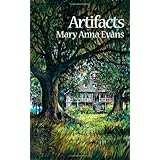
ARTIFACTS


By
Mary Anna Evans

This book came highly recommended by a fellow reviewer who had read and reviewed the book for her website.  Even though I have never had the privilege of visiting the beautiful state of Florida, I discovered that there was a place of beauty that drew me to wanting to visit this state far more than Disney World ever has.

Artifacts was more than a story of a young want-to-be archeologist in the backwaters of the coastal islands off the Florida panhandle.  It was a deep dive into the history of this little known piece of America, that has a history about as old as you get, when it comes to the settling of the Americas.  Ms Evans did a masterful job of immersing the reader into the locale of the islands and its’ people.  Turning the pages, I could almost smell the moss and seaweed on the pages and hear the ebb and flow of the tide as it moved in and out of the channels between the islands. 
Artifacts is about what life can still be like, away from the fast lane in the American South.  It is about mystery and the “piece of pie” that someone always wants that is not theirs to take.  But most of all, it is about home, the true meaning of home and the depth the meaning of home has to some people.  Ultimately, it is all about what it takes to keep and protect this place we call home.
It was with great disappointment that I found myself at the last page of the novel, for I was so far into the lives and story of the Faye Longchamp and her friends that I wasn’t ready for the story to end.  But, alas the mystery was solved and finished for the day.  It is my sincere hope that I will continue to discover more about Faye, her background and history with the other books in the series.
This book is an excellent read, well written, with a well-paced story line that keeps the pages turning at a fast pace, but still allows you to slow down and enjoy the places of discovery.  I give it a definite 5 stars on my list! 
I will be back for second helpings, Mary Anna Evans.  I have fallen in love with Faye Longchamp.
Karen Laird
Shade Tree Book Reviews and Blog

Wednesday, December 31, 2014

THE BRACELET - A Review


By
Dorothy Love


The Bracelet, by Dorothy Love falls under a few sub-categories in the fiction genre- historical, historical romance, and romance.  Set in the Deep South just prior to the start of the Civil War, the story gave us a picture postcard view of life in the upper crust of Savannah Aristocracy.  Dorothy did a beautiful job of painting her detailed pictures of the social life of society and their social events.  Many of her descriptions were true word paintings of the homes and other settings of the time.
There were three distinct storylines to follow within the book:  the courtship of a young socialite couple in the Savannah pre-civil war society, an old murder mystery about the family that raises its’ head in the midst of wedding planning, and the pre-civil war political story.  It was apparent that Ms. Love spent some time researching and digging into the history of the era and into the detail of the workings of society of the period for the writing of the novel.  Great detail went into the scenes and portions of the story about and around great society gatherings.  You could easily visualize yourself moving through the swirling skirts under the candlelight chandeliers and observe the tete’ a tete’ of the cliques within the room as the event was judged behind fans and gloved hands. 
Much as a couple at soiree or picnic on a summer evening in the Deep South, the main storyline wove its way through the novel at a slow meandering pace, stopping to visit or off to wander down a path, leaving wondering where it was going, or if it would get there… But due diligence and patience has its’ rewards, as each of the rabbit trails and seemingly meaningless visits were truly not as they appeared.  For the story was told in the slow southern style that forces one to slow down and enjoy the read, not rush through like a jack rabbit running from the fox.
The elements of the story slowly came together, with a few surprises and hiccups en-route.  A good story, but not a book recommended for the speed reader.  Definitely a book for the porch swing and a big glass or two of that southern sweet tea.
Karen Laird
Shade Tree Book Reviews and Blog